
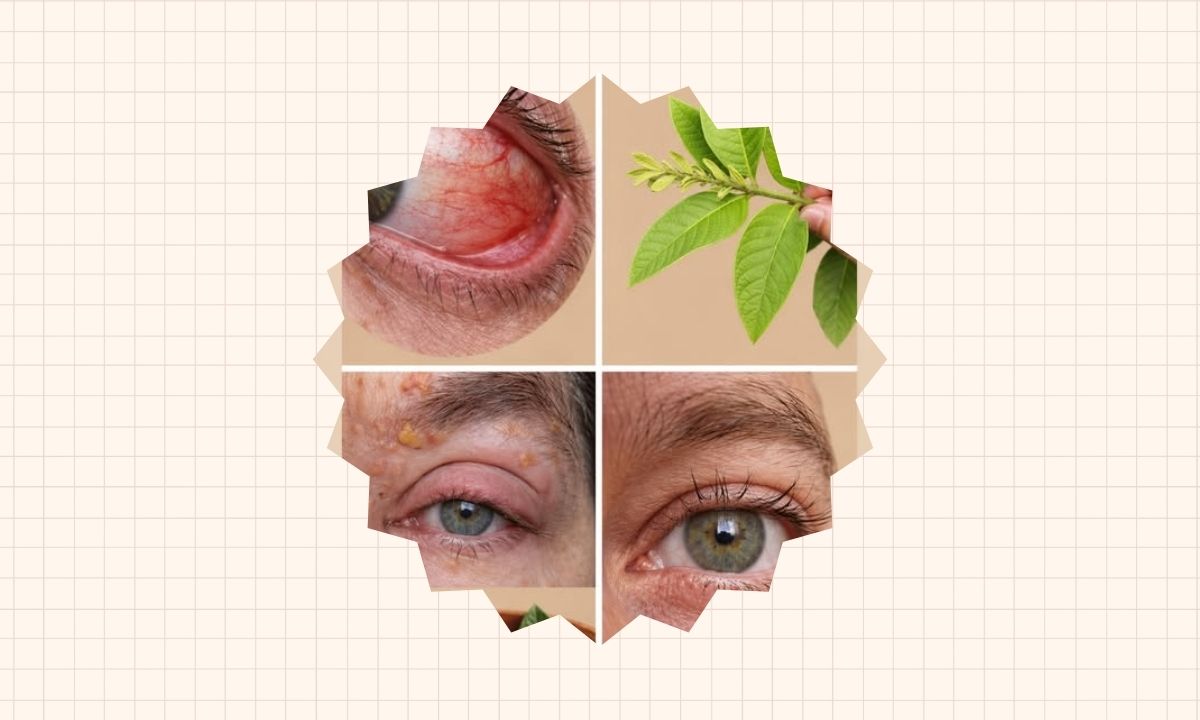
How to use guava to treat eye problems
Guava fruit and leaves can support eye health thanks to their high levels of vitamin A, vitamin C, lutein, and antioxidants, but they are not a cure for eye diseases. They may help reduce irritation, support circulation, and protect against oxidative stress when used safely as food or gentle compresses.
Nutritional Benefits of Guava for Eyes
- Vitamin A (Retinol): Essential for maintaining corneal health and night vision.
- Vitamin C: Guava contains more vitamin C than citrus fruits, protecting against oxidative stress linked to cataracts and macular degeneration.
- Lutein & Carotenoids: Act as natural filters against harmful blue light, protecting retinal cells.
- Flavonoids (Quercetin, Kaempferol): Anti-inflammatory compounds that may reduce puffiness and redness.
Safe Natural Remedies Using Guava
1. Guava Leaf Compress for Irritated Eyes
- Wash 6–8 fresh guava leaves thoroughly.
- Boil in 500 ml purified water for 10–15 minutes.
- Allow to cool completely to room temperature.
- Soak clean cotton pads in the infusion.
- Place pads over closed eyelids for 10–15 minutes.
- Helps reduce puffiness, mild redness, and fatigue.
2. Guava Herbal Tea for General Wellness
- Add dried guava leaves to hot water.
- Steep for 5–7 minutes, strain, and drink.
- Supports immunity and circulation, indirectly benefiting eye health.
3. Fresh Guava Fruit in Diet
- Eat 1 fresh guava daily or add to smoothies.
- Provides vitamin A and C to strengthen vision and protect against age-related decline.
Practical Tips
- Always wash leaves thoroughly before use.
- Use boiled and cooled water for compresses to avoid contamination.
- Never apply raw leaves or unfiltered juice directly into the eyes.
- Guava remedies are supportive only; they do not replace medical treatment for conditions like cataracts, glaucoma, or infections.
Risks and Limitations
- Not a cure: Guava cannot remove cataracts or reverse serious eye disease.
- Hygiene is critical: Poor preparation can introduce bacteria to the eyes.
- Medical care is essential: Persistent redness, pain, or vision changes require an ophthalmologist’s evaluation.